

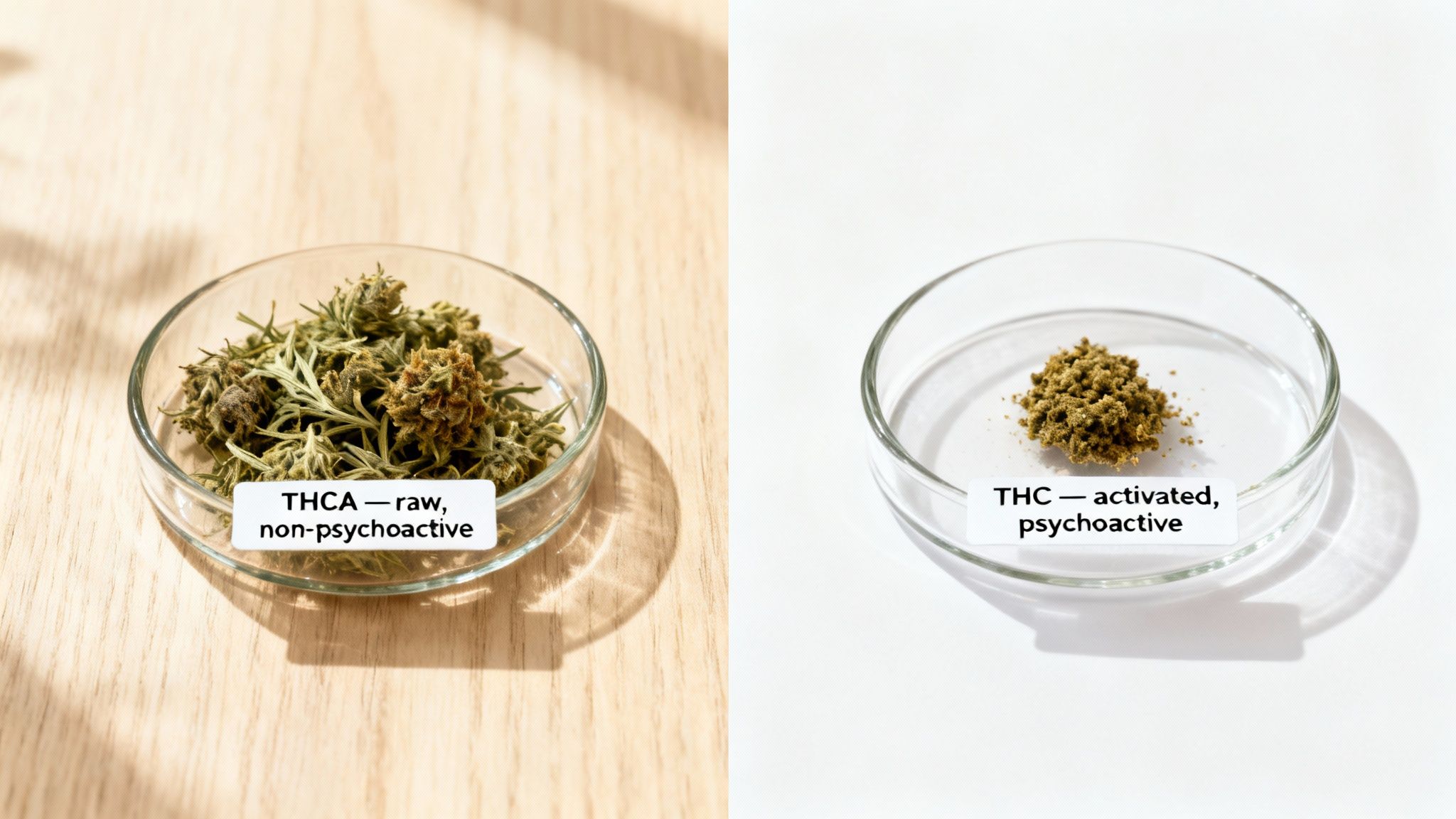
It all boils down to one simple thing: heat. If you're looking at a fresh, raw cannabis plant, what you'll find is THCA, a non-psychoactive compound. It's only when you introduce heat that it transforms into THC, the compound famous for its euphoric effects.
You can think of THCA as the potential, and THC as the realized experience, unlocked by a little bit of fire.
Understanding The Core Chemical Difference
Fresh cannabis flower is packed with Tetrahydrocannabinolic Acid (THCA), not Delta-9-Tetrahydrocannabinol (THC). Chemically, they're almost identical twins, but THCA has an extra bit of structure called a carboxyl group. This small addition makes the THCA molecule too big to properly bind with our body's cannabinoid receptors, which is exactly why it won't get you "high."
This is also why eating a raw cannabis bud won't produce any intoxicating effects. The potential is there, but it's locked inside the THCA molecule. To unlock it, you need to apply heat in a process called decarboxylation.
At a Glance: THCA vs. THC Comparison
To put it plainly, THCA is the precursor to THC. Getting a handle on this relationship is the first step to making smart choices at the dispensary, whether you're eyeing flower, concentrates, or edibles. It clears up why different consumption methods deliver completely different outcomes.
This table breaks down the essentials.
| Attribute | THCA (Tetrahydrocannabinolic Acid) | THC (Delta-9-Tetrahydrocannabinol) |
|---|---|---|
| Psychoactivity | Non-psychoactive; does not produce a "high." | Psychoactive; responsible for euphoric effects. |
| Chemical State | Found in raw, unheated cannabis plants. | The result of heating (decarboxylating) THCA. |
| Activation | Requires heat (smoking, vaping, baking) to convert. | Already activated and bioavailable. |
| Common Products | Raw cannabis flower, kief, unheated concentrates. | Edibles, tinctures, vape oils, activated flower. |
This fundamental difference between an inactive acid and its active form shapes everything, from how products are made and labelled to how they affect you. While they both come from the same plant, their effects are worlds apart.
Key Takeaway: THCA is the non-intoxicating "parent" molecule found in raw cannabis. It only converts into the well-known psychoactive THC when you apply heat. That's why your consumption method—like smoking versus juicing—delivers such a profoundly different experience.
The Science of Activation: Unlocking THC's Potential
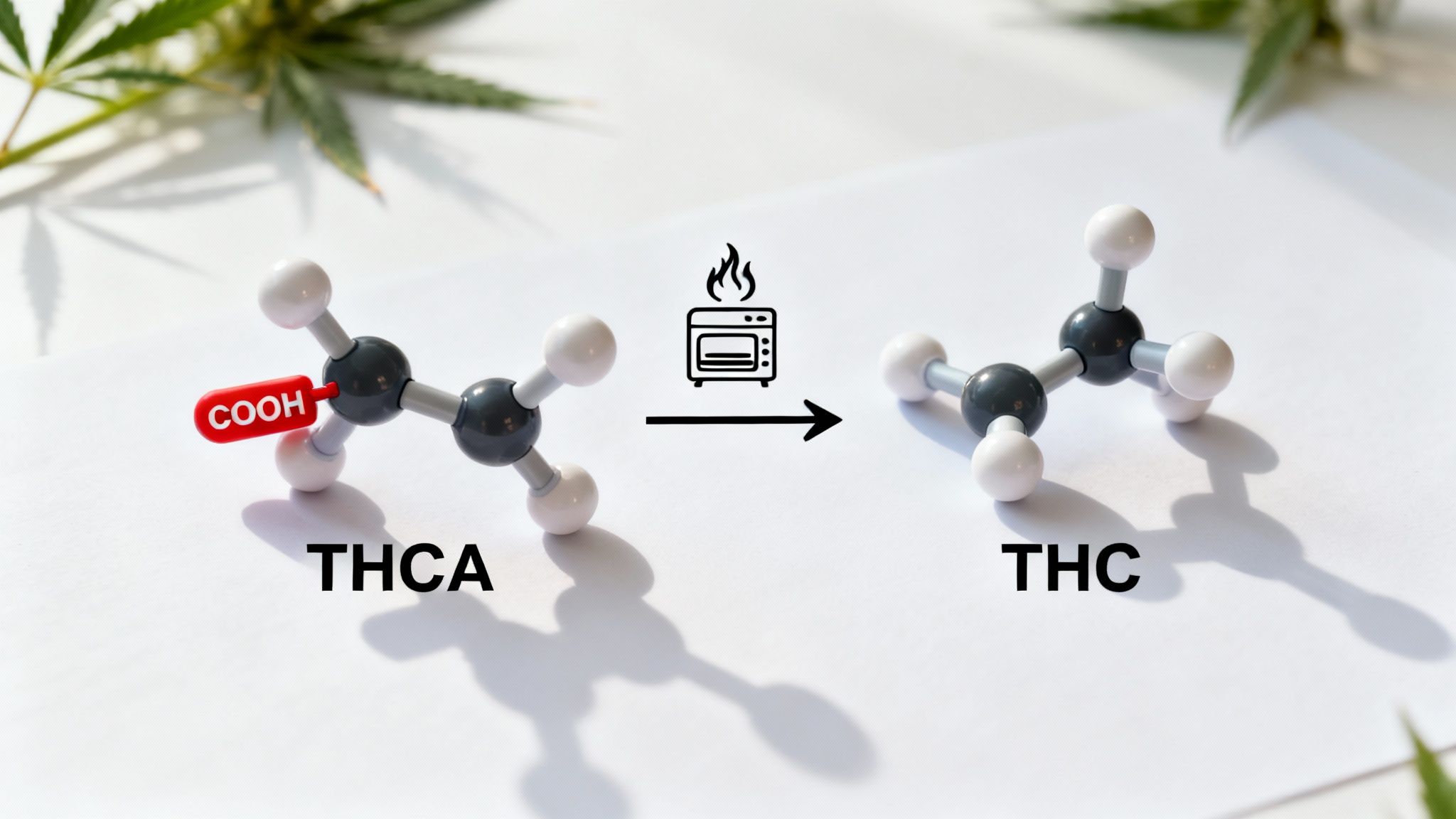
So, how exactly does the non-intoxicating THCA in a raw cannabis bud become the THC everyone knows? The magic happens through a simple chemical reaction called decarboxylation. This is the fundamental step that bridges the gap between the plant's potential and its famous effects.
I like to think of the THCA molecule as a key with a bulky keychain attached. That "keychain" is a carboxyl group—a little cluster of atoms. Because of its size and shape, this key just won't fit into the CB1 receptor "locks" in your brain and body.
Decarboxylation is just the process of removing that keychain. When you add heat, that carboxyl group snaps off and is released as carbon dioxide. What's left behind is the key itself—now THC—which is the perfect shape to unlock those receptors and produce its well-known effects.
Heat is the Key to Transformation
Heat is what gets this whole process started. Without it, THCA is perfectly happy to stay as it is: stable and non-psychoactive. This is precisely why different ways of consuming cannabis can lead to wildly different experiences. It all boils down to how much heat you apply.
Here are the common ways decarboxylation happens:
- Smoking: A simple flick of a lighter provides more than enough heat to instantly convert THCA into THC as you inhale.
- Vaping: Vaporizers give you precise control, heating the cannabis just enough to activate the cannabinoids without actually burning the plant material.
- Baking: If you've ever made edibles, you know this step well. Baking your flower at a low, steady temperature in the oven ensures all the THCA is converted before you infuse it into your butter or oil.
Even time and light can trigger a very slow conversion, which is why we always recommend storing your cannabis in a cool, dark place. Proper storage is crucial for preserving the plant's original cannabinoid profile.
Decarboxylation is the essential step that "flips the switch" on psychoactivity. Without this chemical reaction, the journey from THCA to THC simply doesn't happen, and the potential for a high remains locked away.
Once you get a handle on this process, you gain an incredible amount of control over your experience. For example, tweaking your vaporizer's temperature can change which compounds become active, subtly shifting the flavour and effects. Higher temperatures often give a more intense high, while lower settings can preserve more of the delicate, aromatic terpenes.
From Kitchen Ovens to High-Tech Vapes
The principle remains the same whether you're using a sophisticated vaporizer or your trusty kitchen oven. For anyone making edibles at home, a good rule of thumb is to bake your ground cannabis at around 110°C (230°F) for 30-45 minutes. This slow and low approach ensures a full conversion without scorching the valuable cannabinoids and terpenes.
Smoking, on the other hand, involves incredibly high and uncontrolled temperatures. This results in a nearly instant conversion, but it's not very efficient—some of the THC is actually destroyed by the direct flame. It's one of the reasons the same strain can feel different when smoked versus vaped. Learning how to control this activation is a major step to help you elevate your cannabis experience with more consistent results.
The difference between THC and THCA isn't just for science nerds; it has real, practical implications for every cannabis user. By understanding the science of activation, you can make sure your products deliver exactly what you're looking for, every single time.
Psychoactive vs. Non-Psychoactive: How Will You Feel?
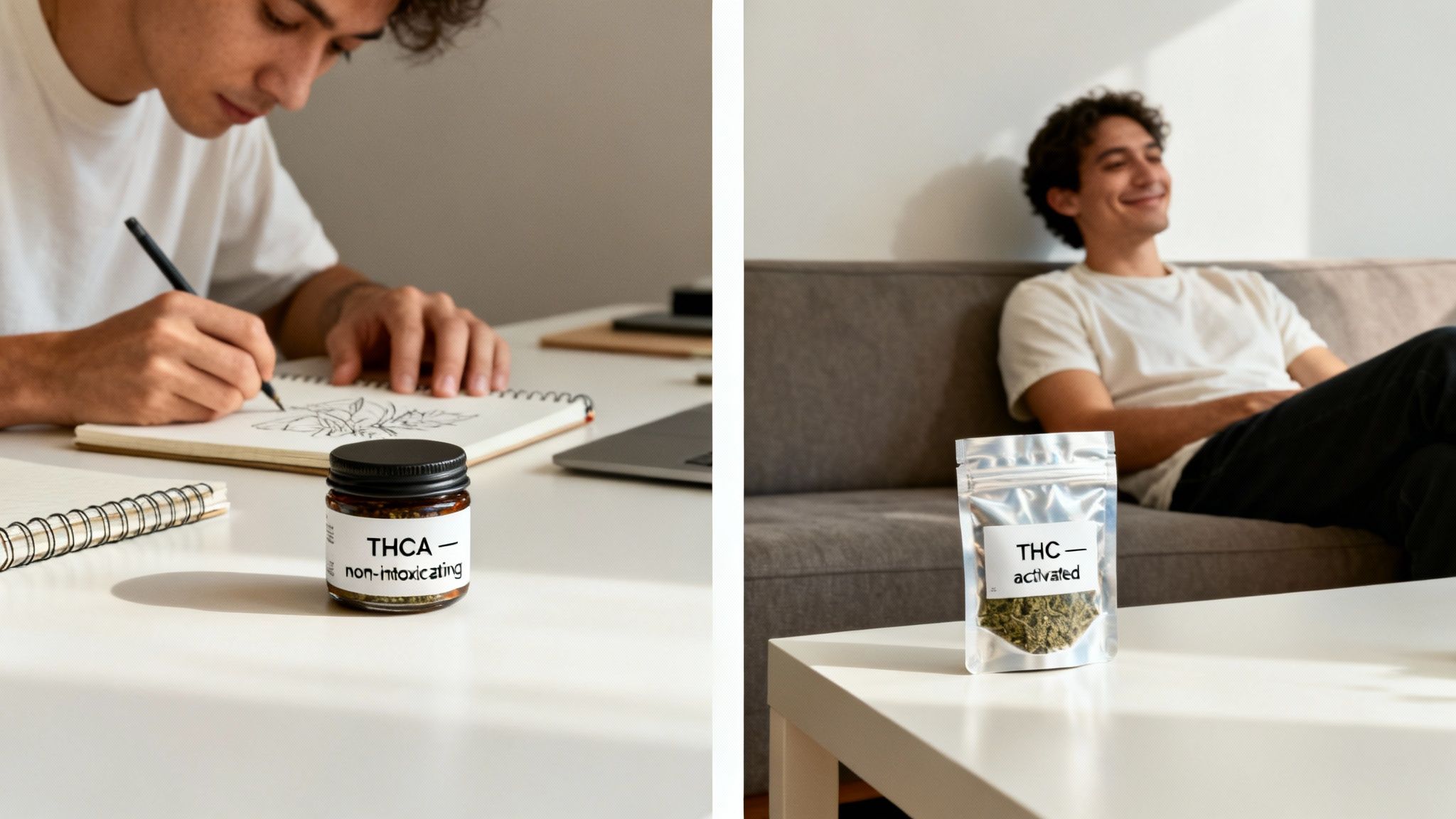
This is where the rubber really meets the road in the THC vs. THCA discussion. Your choice between these two cannabinoids will completely shape your experience, determining whether it’s intoxicating or totally clear-headed. Getting this right is the key to picking a product that actually delivers the recreational outcome you're looking for.
At its core, the difference comes down to how each one interacts with your body. THC is shaped perfectly to bind with the brain's CB1 receptors, and this connection is what produces the euphoric, creative, or deeply relaxing feelings we call a "high." It's the reason people turn to cannabis for social events, creative projects, or just to unwind.
On the flip side, THCA in its raw, unheated form doesn't fit into those receptors nearly as well. Because of that molecular difference, it's completely non-intoxicating. Consuming raw THCA won't alter your perception, mood, or thinking like activated THC does, offering an entirely different kind of experience.
The THC Experience: A Shift in Perception
When you consume THC—whether you smoke it, vape it, or eat an edible—you're signing up for a noticeable effect. The journey can vary a ton based on the strain, the dose, and your own body chemistry, but it almost always involves a change in how you perceive the world around you.
This psychoactive journey is exactly what most recreational users are after. It’s what makes music sound fuller, food taste incredible, and conversations flow more freely.
- Euphoria and Mood Lift: Many people feel a wave of happiness, find themselves laughing more, and enjoy a general sense of well-being.
- Deep Relaxation: THC is famous for its calming effects, helping to quiet a busy mind and relax tense muscles.
- Creative Spark: Some find that THC helps them break out of old thought patterns, making it a favourite for brainstorming or artistic sessions.
- Social Connection: The right dose in a social setting can help lower inhibitions and make it easier to connect with others.
The entire recreational appeal of THC is built on its ability to alter your state of consciousness. It's the engine behind the classic cannabis high, delivering experiences that range from invigorating and cerebral to profoundly calming.
Choosing a THC-heavy product is an intentional decision to embrace these psychoactive effects. You're opting to temporarily change your perception for fun, relaxation, or creative insight. This is exactly why products like pre-rolls, vape carts, and gummies are so popular—they deliver a predictable, activated dose of THC right out of the box.
The THCA Experience: All About Clarity
In stark contrast, the experience of consuming raw THCA is defined by what you don't feel. Because it’s non-intoxicating, THCA offers a way to engage with the cannabis plant without any of the psychoactive side effects. This makes it a unique choice for anyone who wants to completely avoid a "high."
People who go for raw THCA aren't looking for euphoria or a sensory shift. They're usually interested in consuming cannabis in its natural, unaltered state—much like you'd eat any other raw green vegetable.
While less common, this path appeals to a specific user who values mental clarity above all else. Popular ways to consume raw THCA include:
- Juicing Raw Cannabis: Blending fresh cannabis leaves and flowers into smoothies or juices.
- Using Unheated Tinctures: Finding tinctures that were processed without heat to keep the THCA intact.
- Garnishing Food: Sprinkling a bit of ground, raw flower onto a salad or dish, just like any other herb.
Ultimately, the THC vs. THCA debate boils down to one simple question: are you looking for a psychoactive experience or not? If you're searching for something non-intoxicating, you might also find that understanding the therapeutic potential of CBD offers another fantastic option to explore. Your answer will point you directly to the right product on the shelf.
How Testing and Labeling Reflect Potency
Walking into a dispensary and trying to read a product label can feel a bit like cracking a code. But once you understand what you're looking for, that label becomes your best guide to the experience you're about to have. Under Canadian regulations, every licensed product has to be tested, and the results are printed right there for you to see. The key to it all is knowing the difference between THCA and THC.
When a lab analyzes raw cannabis flower, they measure the levels of both THCA (the non-psychoactive raw cannabinoid) and THC (the active one). If you only looked at the THC number on a bag of flower, you’d get a completely wrong idea of its strength. That's because most of the good stuff is still locked up as THCA, waiting for you to apply some heat.
Decoding Total THC
This brings us to the most important number on any package of flower or concentrate: 'Total THC'. Think of this as the product's maximum potential strength. It's the number that tells you how potent the product could become once you heat it up and convert all that THCA into psychoactive THC.
To get this number, licensed labs use a specific formula that accounts for a little chemistry quirk. When THCA turns into THC through decarboxylation, it sheds a carboxyl group and actually becomes a bit lighter.
The Potency Formula: To give you an accurate picture of the final strength, labs use this calculation: Total THC = (THCA % x 0.877) + THC %. This formula is your best friend for predicting the true potential of a product after you light it up or bake with it.
So, if you see a flower labelled with 20% THCA and 1% THC, you don't just add them together. The actual Total THC would be (20 x 0.877) + 1, which comes out to 18.54%. That’s the number you should be paying attention to when judging how strong it will be.
Label Differences: Raw vs. Activated Products
What you see on a label depends entirely on the product type and whether its cannabinoids are in their raw or activated state. Knowing this helps you predict how a product will feel and how fast it will kick in.
Here’s a quick guide to reading different labels at your local dispensary:
For Raw Flower and Concentrates: The golden rule is to always look for the Total THC value. This tells you the psychoactive potential you're unlocking when you smoke, vape, or cook with it. The individual THCA and THC percentages are good to know, but the "total" figure is what really matters for the final effect.
For Edibles, Tinctures, and Vape Carts: These products are a different story. They've already been heated during manufacturing, so all the THCA has been converted to THC. The label will just give you the straight-up THC content per serving or per package. There's no "Total THC" to worry about because the conversion is already done.
For instance, a package of gummies that says "10 mg THC per piece" is giving you a direct measurement of the active compound you're about to eat. No math needed—the potency is right there. Getting comfortable with these distinctions is how you learn to read any label with confidence and pick the perfect product for the experience you’re looking for.
Choosing Your Product: THCA-Rich vs. THC-Ready
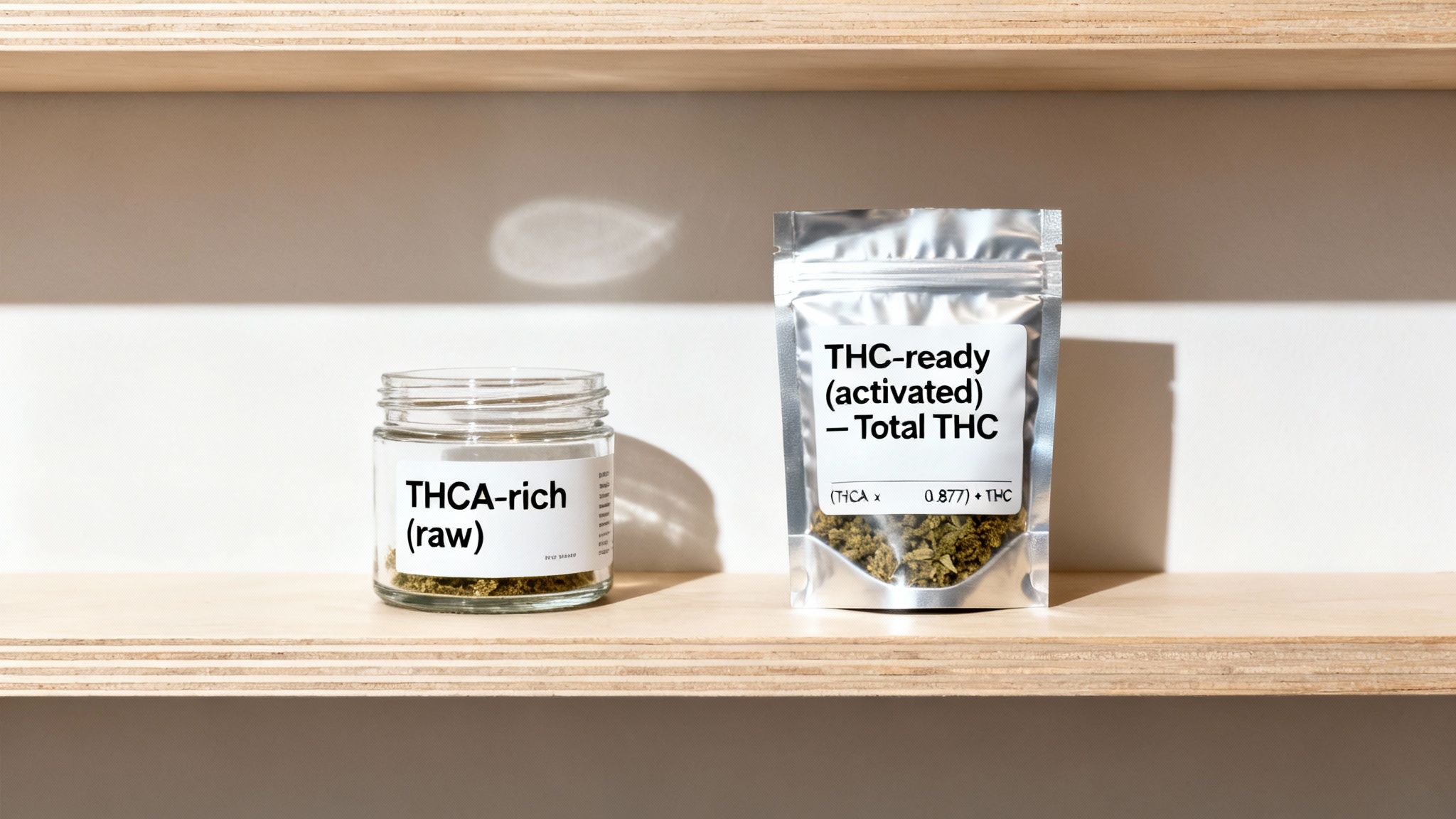
Now that you've got the science down, walking into a dispensary doesn't have to be overwhelming. The choice between THCA and THC really boils down to what kind of experience you're after and how hands-on you want to be. Products on the shelf fall into one of two camps: THCA-rich or THC-ready.
Think of THCA-rich products as the "DIY" route. You're getting cannabis in its natural, unheated state, which means you're in charge of the activation. On the flip side, THC-ready products have already been decarboxylated for you, delivering their effects right out of the box.
The Appeal of THCA-Rich Products
When you pick up classic cannabis flower, kief, or even certain concentrates like shatter and wax, you're buying a product packed with THCA. These all need a little help from you—a lighter, a vaporizer, or an oven—to transform that THCA into the psychoactive THC you're looking for.
That extra step is precisely why so many people love them. It’s all about control and versatility.
- You control the conversion: Whether you’re rolling a joint, packing a vape, or baking your own edibles, you decide exactly how and when the THCA turns into THC.
- A customizable experience: Different heating methods can subtly change the flavour and effects. Vaping at lower temperatures, for example, often preserves more of the delicate terpenes than smoking does.
- Freshness and tradition: For many, there's just no substitute for the ritual and authentic taste of consuming cannabis in its flower form.
This desire for a hands-on experience is a huge driver in the Canadian market. In British Columbia, for instance, THC sales exploded after legalization. Per capita annual sales for those aged 15 and over shot up from 63.8 mg in 2019 to 129.4 mg in 2020—more than doubling in a single year. Flower, which is naturally high in THCA, has consistently led those sales, proving just how much consumers value it.
When to Choose THCA-Rich: This is the way to go for the home baker planning a weekend of making custom-strength brownies. It's also perfect for the person who simply loves the ritual of grinding fresh flower for an evening smoke.
The Convenience of THC-Ready Products
On the other side of the aisle, you have THC-ready products. These have been professionally decarboxylated during production, meaning the THC is already active and available for your body to use. This category is all about convenience and predictability.
THC-ready products are made for simplicity. No heat, no prep, no guesswork.
Here’s a quick look at what you’ll find in this category:
- Edibles: Gummies, chocolates, and infused beverages are the classic examples. The THC is active and ready to go; effects kick in after digestion.
- Vape Cartridges: The oil inside a vape pen is already activated. The battery just heats it enough to create a vapour, delivering THC almost instantly.
- Tinctures and Sprays: These liquid extracts are designed for use under the tongue or swallowed, offering a discreet and precisely measurable dose of active THC.
This category is perfect for anyone who values convenience, discretion, and, most importantly, accurate dosing. You know exactly how much THC is in each serving, which is key for a consistent and controlled experience. To fully appreciate how these products work, it helps to understand the power of whole-plant cannabis and the synergy between all its compounds.
Ultimately, choosing between THC and THCA comes down to your lifestyle. Do you want to be the chef, controlling every step with raw flower? Or do you prefer the ease of a ready-made meal, perfectly portioned and good to go? Both are great options—they just take different routes to get you there.
Your Top Questions About THCA and THC
Let’s wrap this up by tackling some of the questions I hear all the time at the dispensary. Getting these practical details straight can make all the difference when you're deciding what to buy.
Will I Fail a Drug Test if I Only Use THCA?
I wouldn't risk it. While it’s true that standard drug tests are looking for THC, not its raw, acidic form, THCA is a bit of a moving target.
The problem is its instability. THCA can start converting to THC all on its own, whether it's sitting on a shelf for a while or even just interacting with your body chemistry. Because modern drug tests are so sensitive, there's a real chance that consuming THCA-rich products could still trigger a positive result for THC. If testing is a concern, the only truly safe bet is to steer clear of all cannabinoid products.
How Do I Figure Out the Potency on a Cannabis Label?
When you’re looking at products that need heat, like flower or concentrates, cut through the noise and look for one number: "Total THC." In Canada, regulated labels have to show separate values for 'THC' and 'THCA', but the 'Total THC' is your real-world guide to potential psychoactivity.
This figure tells you the maximum possible strength of the product once you heat it up. It’s calculated with a specific formula that accounts for the conversion: Total THC ≈ (THCA x 0.877) + THC. Think of it as the most honest indicator of how strong that product will actually feel.
For products that are ready to go right out of the package, like edibles or vape carts, the work has already been done for you. The label will just give you the active THC content (e.g., 10 mg of THC per gummy), which makes things much simpler.
Can I Make Edibles at Home with Raw Flower?
Absolutely, but you have to do one critical thing first: activate the flower. This step, known as decarboxylation (or "decarbing"), is non-negotiable if you want your edibles to have any psychoactive kick. Just tossing raw cannabis into your brownie mix won't work because the THCA hasn't turned into THC yet.
Here’s the simple way to decarb your flower:
- First, grind your cannabis up, but not too finely—a coarse consistency is perfect.
- Next, spread it out in a single, even layer on a baking sheet.
- Bake it low and slow in the oven, right around 110°C (230°F), for about 30-45 minutes.
This gentle heat is what magically transforms THCA into THC, making it ready to be infused into butter, oil, or whatever base you're using for your creations. Forgetting to decarb is probably the most common mistake people make when they first try making edibles from scratch.
Ready to explore a curated selection of both THCA-rich and THC-ready products? The knowledgeable team at Cannabission Cannabis can guide you to the perfect choice for your needs. Visit us in-store or check out our menu online for convenient delivery in Kelowna at https://cannabission.ca.


