


Welcome to the world of cannabis! If you're just starting to explore THC or simply want to know more, you've come to the right place. We're here to break down THC, the famous compound behind cannabis's unique effects, in a way that’s clear, straightforward, and easy to follow.
Your Introduction to the World of THC

Think of this guide as a chat with one of our experienced budtenders here at Cannabission. Our only goal is to share reliable, practical information so you can enjoy cannabis responsibly and feel confident in your choices. We're focusing purely on the recreational side of things, with no medical claims.
Ever walked into a dispensary and felt a bit lost? You’re definitely not alone. The cannabis world can seem complex, but we'll tackle it one piece at a time.
What Is THC Anyway?
So, let's get right to it. THC (Tetrahydrocannabinol) is the main psychoactive ingredient in the cannabis plant. In simple terms, it's the component responsible for the feeling of being ‘high’—that sense of euphoria, creativity, or deep relaxation people associate with cannabis.
When you look at a product, you’ll see its THC content listed either as a percentage (common for dried flower) or in milligrams (for edibles, drinks, and oils). This number is your best indicator of that product's strength.
Why Understanding THC Matters
Getting a handle on THC is all about taking control of your experience. When you know what THC is and how it works, you can steer your journey toward the positive, safe, and enjoyable outcome you're looking for. A little knowledge makes all the difference.
Understanding THC isn't just about the science—it's about making your experience your own. The basics give you the power to choose products that fit what you want to do, whether that’s kicking back for a quiet night in or getting social with friends.
To help build your confidence, this guide will walk you through a few key areas:
- How it works: We’ll explore the fascinating way THC interacts with your body’s natural systems.
- Product types: You'll get the rundown on the differences between smoking, vaping, edibles, and more.
- Safe use: We'll share our go-to tips for responsible consumption, especially for newcomers.
- Legal guidelines: We’ll clear up the local rules for using cannabis in Kelowna and across Canada.
By the time you're done, you'll have a solid foundation for navigating the incredible variety of cannabis products out there. Let’s get started.
How THC Interacts with Your Body
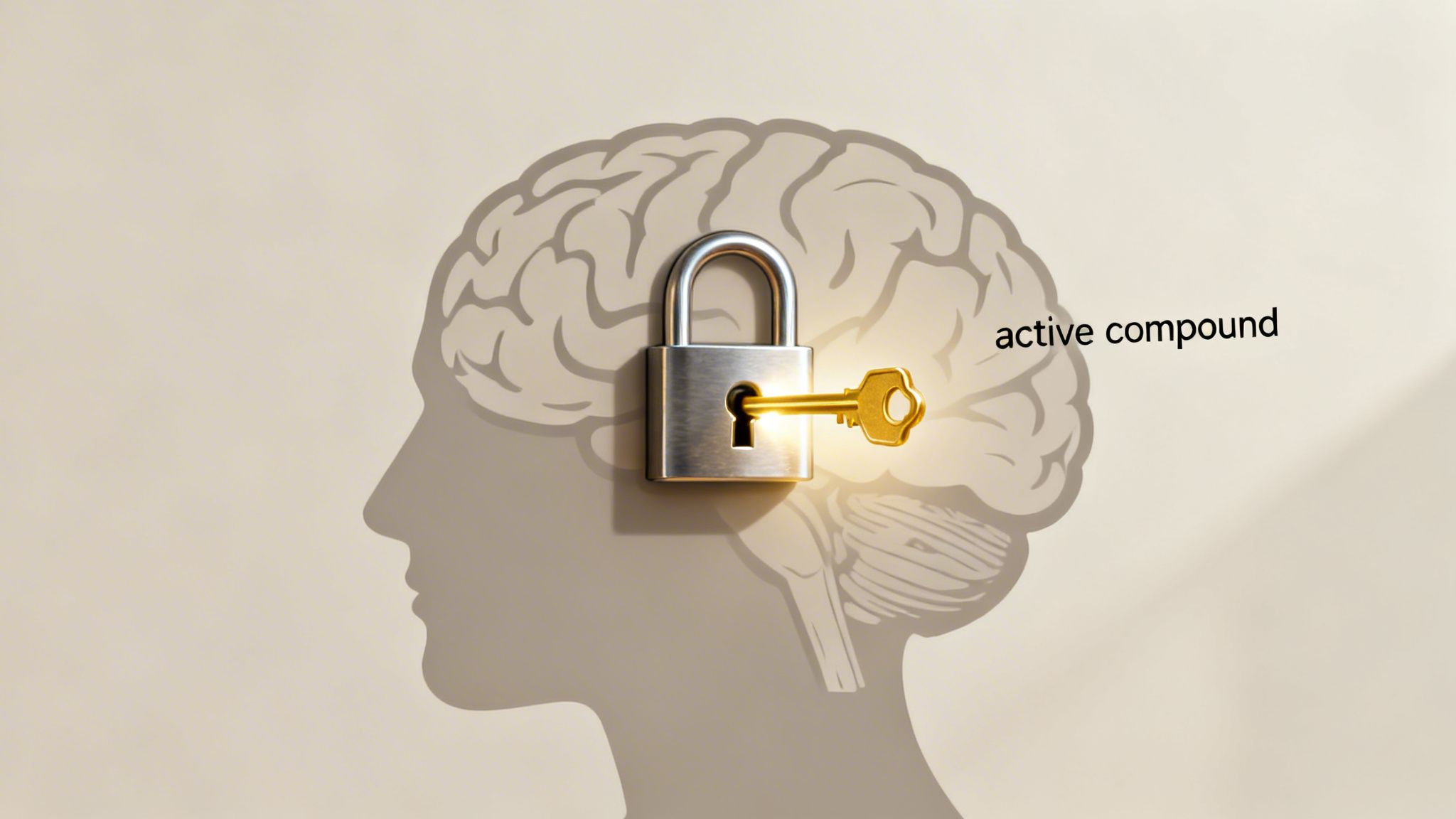
So, what’s really going on inside your body when you use cannabis? The science behind that classic “high” is surprisingly straightforward, and it all boils down to how THC, the main active ingredient in cannabis, plugs into a network that’s already running inside you.
This interaction is what causes everything from a shift in your mood to a sudden, deep appreciation for a good song or a tasty snack. Getting a handle on this basic biology is your first step toward having a more predictable and enjoyable experience.
Think of it as your body having its own internal communication system. THC just happens to speak its language fluently.
Your Body's Endocannabinoid System
To get how THC works, we first need to talk about your endocannabinoid system (ECS). This isn’t something cannabis creates; it’s a natural part of your body. Imagine a massive network of tiny docking stations, or “receptors,” located all over, with a huge concentration of them in your brain and nervous system.
Your ECS helps regulate all sorts of things—mood, appetite, memory, and perception, to name a few. Your own body produces molecules called endocannabinoids that act as the natural communicators for these receptors, helping to keep everything running in balance.
This is exactly where cannabis comes into play. The compounds in the plant, especially THC, have a molecular shape that’s an almost perfect match for your body’s own endocannabinoids, allowing them to use the same system.
THC: The Master Key
If your endocannabinoids are the regular keys, then THC is like a master key. It has a remarkable ability to fit perfectly into a specific type of receptor called the CB1 receptor. These CB1 receptors are packed into the parts of your brain that handle things like pleasure, time perception, focus, and your senses.
When you smoke, vape, or eat a THC product, that master key gets to work, binding to those CB1 receptors. By fitting into the receptor, THC temporarily changes the way your brain cells send and receive messages.
This single action is what triggers the psychoactive effects that people associate with cannabis. It's not some kind of magic—it's just biology. THC mimics compounds your body already makes, but it can amplify their effects on your mood and perception.
This also explains why experiences can differ so much from person to person. The final effect depends on which parts of the brain are most affected and how your own unique ECS responds. To see how other plant compounds contribute, you can learn more about the power of whole-plant cannabis in our detailed guide.
From Interaction to Sensation
As soon as THC activates enough CB1 receptors, a whole cascade of effects begins. This is the moment you start to feel the “high.” That altered brain chemistry can lead to a wide range of enjoyable sensations that are different for everyone.
Some of the most common experiences include:
- A wave of relaxation and general feeling of well-being.
- A skewed perception of time, where minutes can feel much longer.
- Heightened senses—colours might look more vibrant or music may sound richer and more detailed.
- A notable increase in appetite, better known as “the munchies.”
It’s crucial to remember that these feelings are temporary. As your body breaks down and clears out the THC, its influence over the ECS fades, and things go back to normal. How you choose to consume your cannabis—whether through inhalation or edibles—plays a huge role in how quickly these sensations kick in and how long they stick around.
THC vs. CBD: Understanding the Key Differences
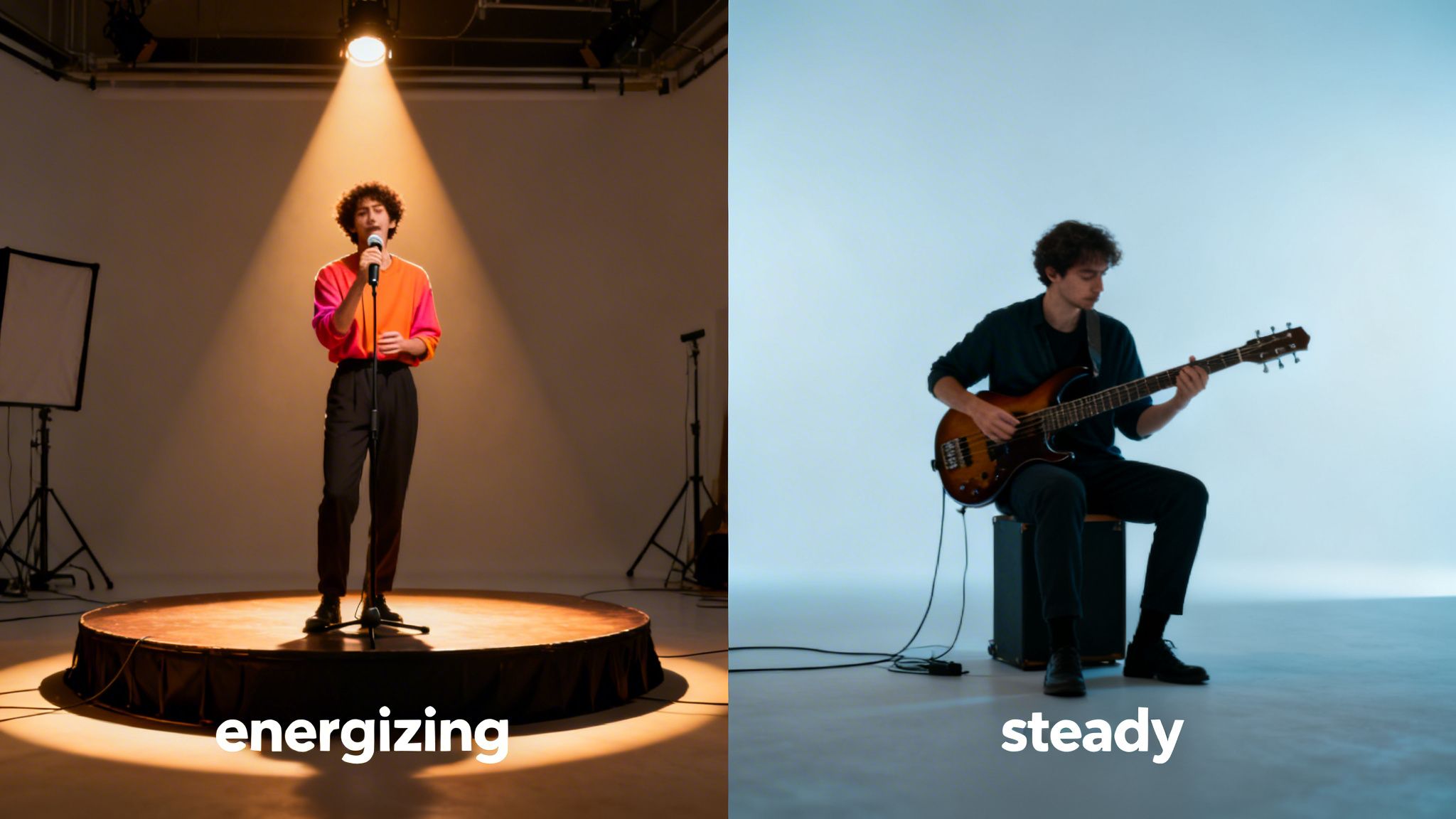
One of the first questions people have when they walk into a dispensary is, “So, what’s the real difference between THC and CBD?” It's a great question. While they both come from the cannabis plant, they offer completely different experiences.
Think of it like a band. THC is the charismatic lead singer, grabbing the spotlight and defining the show's energetic vibe. CBD, on the other hand, is the steady bassist, laying down a solid foundation without ever stealing the show. Knowing which musician you want to listen to is key to picking the right product for your recreational experience.
The main difference really boils down to one thing: psychoactivity. THC is the famous compound that causes the euphoric "high" we associate with cannabis. It does this by binding directly to the CB1 receptors in your brain, leading to those noticeable shifts in perception, mood, and creativity.
Different Effects, Different Experiences
While THC is known for its headlining effects, CBD works in a much more subtle way. It interacts with your body's endocannabinoid system indirectly and doesn't produce any intoxicating feelings. This is a huge reason why it has become so popular with people who want the general wellness qualities of the plant without the high.
This basic difference in how they work creates two very distinct paths. The choice isn't about which one is "better" but about what you're looking for. Are you hoping for a major shift in your headspace, or are you after something that works more in the background?
The easiest way to remember it is this: THC changes your perception, while CBD does not. Keep that simple rule in mind, and you'll have a much easier time navigating the options at a dispensary.
If you're curious to dive deeper into the non-intoxicating side of cannabis, you can learn more about the potential of CBD in our detailed guide. It’s a fantastic resource for understanding its unique place in the world of cannabis.
THC vs. CBD At a Glance
To make things even clearer, let's put these two cannabinoids side-by-side. Seeing their key features laid out like this can really help simplify things when you're trying to make a choice.
| Characteristic | THC (Tetrahydrocannabinol) | CBD (Cannabidiol) |
|---|---|---|
| Main Effect | Psychoactive; produces a "high" or euphoria. | Non-psychoactive; does not produce a "high." |
| Legal Status | Legal but regulated in Canada for recreational use. | Widely legal and available in Canada. |
| Typical Use | Sought for recreational, social, and creative pursuits. | Used for general wellness without intoxication. |
| Interaction | Binds directly with CB1 receptors in the brain. | Interacts indirectly with the endocannabinoid system. |
This table cuts right to the chase, highlighting the contrasts that will shape your experience. THC is your classic choice for its well-known effects, while CBD offers an entirely different kind of experience with the plant.
Ultimately, your cannabis journey is your own. Whether you find yourself drawn to the dynamic experience of THC, the gentle nature of CBD, or a balanced product with a bit of both, having this basic knowledge is powerful. It means you can walk into a dispensary like Cannabission feeling confident and ready to find exactly what you're looking for.
Exploring Different Ways to Consume THC
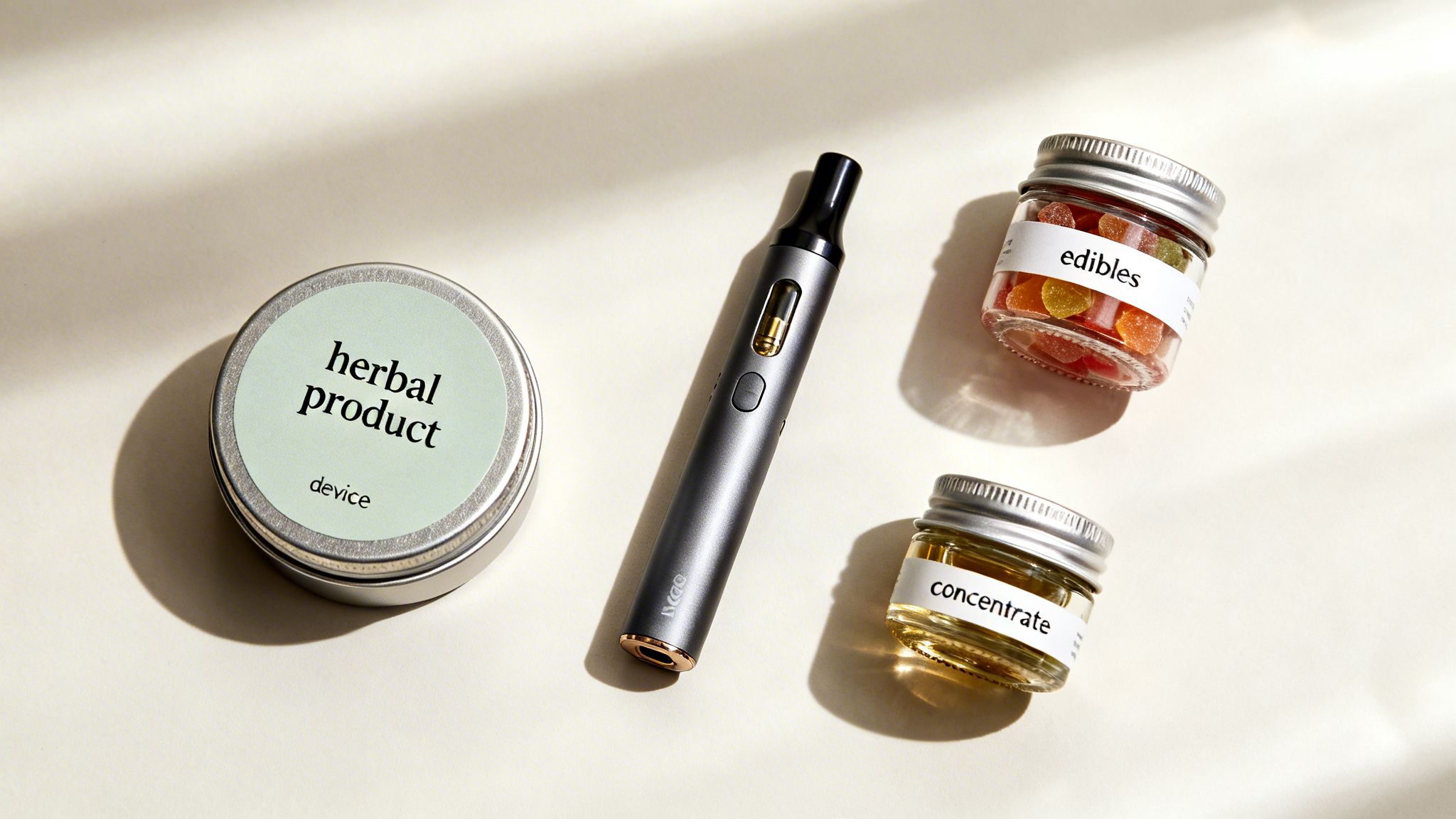
Once you've got a handle on what THC is, the fun part begins: figuring out how you want to experience it. The world of cannabis is incredibly diverse, with a product out there for just about any preference or situation you can imagine. From classic methods that have been around for ages to sleek modern tech, how you choose to consume THC really dictates how your experience will unfold.
Think of it this way: your choice of product should match your game plan. Are you after a quick-acting buzz for a social night out, or are you settling in for a lazy weekend and want a slow, long-lasting ride? At a dispensary like Cannabission, you’ll find that the selection is carefully chosen to cater to exactly these kinds of different needs.
Let's walk through the most common ways to consume THC. By the end, you'll be able to walk into any dispensary feeling like you know exactly what you’re looking for.
Inhalation Methods: Smoking and Vaping
Inhalation is the quintessential cannabis experience for many people. When you smoke or vape, THC heads straight to your lungs and into your bloodstream, delivering the fastest effects possible—often within just a few minutes.
Smoking (Flower and Pre-rolls): The classic approach. This involves burning dried cannabis flower and inhaling. You can buy flower to use in your own pipe or bong, or grab pre-rolls for a no-fuss, ready-to-go option. The effects are almost instant, but they also tend to fade faster than with other methods.
Vaping (Cartridges and Dry Herb Vapes): Vaping is all about heating the cannabis without actually burning it. This produces a vapour instead of smoke, which many people find offers a smoother and more flavourful experience. Vape cartridges, filled with cannabis oil and attached to a battery, are a super discreet and user-friendly choice. The effects hit just as fast as smoking.
The biggest plus with inhalation is the control it gives you. Because the effects come on so quickly, it’s much easier to gauge how you're feeling and stop when you've reached your sweet spot.
Oral Consumption: Edibles and Oils
If you're looking for a long-lasting experience and prefer to skip the smoke and vapour altogether, edibles are a fantastic option. They come in all sorts of forms—gummies, chocolates, drinks, capsules—all infused with a very precise dose of THC.
Here’s the thing about edibles: when you eat one, the THC takes a detour through your liver before hitting your bloodstream. This digestive journey transforms it into a different compound, which explains why edibles are famous for their powerful and extended effects.
The golden rule for edibles is simple: start low and go slow. It can take anywhere from 30 minutes to two hours to feel anything, and it's a classic rookie mistake to get impatient, think it’s not working, and take more. Give it time!
Oils and tinctures, which are usually dropped under the tongue (sublingually), offer a nice middle ground. They get absorbed faster than a typical edible but still last longer than inhalation.
Concentrates: A High-Potency Option
Concentrates are exactly what they sound like: extremely concentrated forms of THC. Products like shatter, wax, and live resin are made by extracting the most desirable compounds—cannabinoids and terpenes—from the plant. The result is a product that is significantly more potent than flower.
These are typically consumed with a special tool called a dab rig or a vaporizer made for concentrates. Because of their sheer strength, concentrates are best left to seasoned users who are already comfortable with THC's effects. They deliver a powerful experience with a very rapid onset.
While there’s a huge range of THC products out there, local dispensaries offer a great window into what people in the community are actually enjoying. As the first legal cannabis retailer in Kelowna's Mission area, established in 2020, Cannabission has had a front-row seat to the products and consumption methods that really connect with our customers. You can discover more about our local story and offerings on our website.
THC Consumption Methods Onset and Duration
To help you zero in on the right product for you, here’s a quick-reference table outlining what to expect from each method. Remember, these are general timelines; your personal metabolism, tolerance, and the exact product will all play a role in your experience.
| Method | Typical Onset Time | Typical Duration |
|---|---|---|
| Smoking/Vaping | Within minutes | 1 to 3 hours |
| Edibles | 30 minutes to 2 hours | 4 to 8+ hours |
| Tinctures (Sublingual) | 15 to 45 minutes | 2 to 4 hours |
| Concentrates | Within minutes | 1 to 3 hours |
Understanding these key differences is the secret to mastering your cannabis journey. Whether you opt for the instant feedback of a vape or the slow, steady cruise of an edible, you’re now equipped to choose the perfect THC product for any occasion.
A Guide to Safe and Responsible THC Use
Exploring the world of THC can be a fantastic experience, but making sure you do it responsibly is easily the most important part. Think of this section as a straightforward, no-judgement guide to safe consumption. Here at Cannabission, we’ve always believed that an informed customer is a confident one, and these tips are all about helping you stay in control of your journey.
If there’s one piece of advice we share with everyone—from absolute beginners to seasoned pros—it’s this golden rule: start low and go slow. This simple philosophy is your best friend, especially when you’re trying a new product or a different format like edibles for the first time.
Everyone’s body chemistry is unique, so how THC affects you won’t be the same as how it affects your friends. Giving yourself the time and space to see how a particular product feels is the real key to a safe and pleasant session.
Understanding Product Labels
Your first step toward responsible use happens before you even open the package. It all comes down to reading the label. In Canada, licensed cannabis products must have clear information about their potency, which is your best tool for managing your experience.
- THC Percentage (%): For dried flower and pre-rolls, you’ll find the THC content listed as a percentage. A flower with 15% THC is generally considered a moderate potency, while anything over 25% is getting into very high-potency territory.
- Milligrams (mg): With edibles, drinks, and oils, THC is measured in milligrams (mg). For a beginner trying edibles, a single serving of 2.5 mg is a perfect starting point.
Always double-check the total THC in the entire package. It's surprisingly easy to eat a whole chocolate bar without realising it contains multiple servings, which can lead to an uncomfortably strong experience.
Your Environment Matters
Where you are can completely change your experience with THC. A comfortable, safe, and familiar place helps you relax and enjoy the effects. You'll often hear this called "set and setting."
Your mindset ("set") and your physical surroundings ("setting") are two of the most powerful ingredients in your cannabis experience. Being in a good headspace and in a place where you feel secure can make all the difference between a great time and an anxious one.
If you’re new to THC or just trying something stronger than usual, stick to a relaxing space like your own home. It’s best to avoid crowded, loud, or overstimulating places until you feel confident in how you’ll react.
Important Safety and Storage Practices
Being a responsible cannabis user is about more than just your own experience; it’s also about keeping the people and pets around you safe. This means proper storage and being mindful of your consumption habits are non-negotiable.
Mixing with Other Substances
We strongly advise avoiding mixing THC with alcohol, particularly if you're new to cannabis. Combining the two can amplify the effects of both in unpredictable ways, often leading to dizziness, nausea (the "spins"), or intense impairment.
Secure Storage Solutions
Properly storing your cannabis is one of the most critical parts of responsible ownership.
- Always keep cannabis products in their original, child-resistant packaging.
- Store them somewhere secure, like in a locked box or a high, out-of-reach cabinet.
- Make sure all products are kept far away from children, teens, and pets.
Treat your cannabis products with the same caution you would any other adult-use substance. As a dispensary established on July 3rd, 2020, in Kelowna, we at Cannabission have made customer education on these safety topics a priority from day one. You can learn more about our commitment by checking out our dispensary details and community role.
Navigating Cannabis Laws in Kelowna and Canada
So, cannabis is legal in Canada—but what does that actually mean for you here in Kelowna? While recreational cannabis got the green light federally back in 2018, each province has its own set of rules. It might seem a bit confusing at first, but the local laws are actually quite simple once you get the hang of them.
Let’s walk through the specifics for British Columbia so you can enjoy cannabis confidently and, most importantly, legally.
Key Rules for British Columbia
Here in B.C., the provincial government has laid out some clear, common-sense regulations for buying and using cannabis.
- Legal Age: You must be 19 years of age or older to buy, carry, or consume cannabis. When you visit a dispensary or get a delivery, have your government-issued photo ID ready. It's standard practice, just like buying alcohol.
- Public Possession Limit: In public, an adult can legally carry up to 30 grams of dried cannabis or its equivalent (like edibles, extracts, or oils).
These two rules are the foundation of responsible cannabis use across the province, from Kelowna to Vancouver Island.
Where You Can and Cannot Consume in Kelowna
Knowing where you’re allowed to light up or vape is just as important as knowing how much you can buy. In Kelowna, the rules are all about balancing personal freedom with public comfort and safety.
Generally, you’re free to consume cannabis in a private residence. The big no-go zones are the same places where smoking and vaping tobacco are already banned. This means consumption is prohibited in most public areas, including:
- Indoor public spaces like restaurants, malls, and workplaces
- Public transit, bus shelters, and taxis
- Playgrounds, sports fields, and any school properties
- Within a certain buffer zone around the doors, windows, and air intakes of public buildings
The guiding principle is pretty simple: be considerate of the people around you. If it feels like a bad spot to smoke a cigarette, it’s probably not the place for cannabis either. Keep an eye out for local signs, especially in parks, as they’ll tell you if any specific restrictions apply.
The Importance of Licensed Retailers
We can't stress this enough: always buy your THC products from a licensed, regulated source. It’s about more than just following the law—it’s about your health and safety.
Products from the unregulated market come with zero guarantees. They aren’t tested for harmful contaminants like pesticides or heavy metals, and the THC content listed on the package can be wildly inaccurate. You just don’t know what you’re getting.
Licensed retailers are your only assurance of a safe, high-quality product. Every single item you see on a legal dispensary’s shelf has gone through rigorous testing mandated by Health Canada. This ensures what’s on the label is what’s in the package, giving you a clean, predictable, and safe experience.
For those looking for a trusted local source, you can learn more about our fully tested products and our convenient Kelowna cannabis delivery service right on our website. It’s all part of our commitment to building a safe and transparent cannabis community.
Frequently Asked Questions About THC
Stepping into the world of THC can bring up a lot of questions. We get it! Our budtenders hear them all, and we love helping people find their footing. To make things a little easier, we’ve put together answers to some of the most common things people ask, with a focus on safe and enjoyable recreational use.
What Is a Good Starting Dose of THC for a Beginner?
This is probably the single most important question for anyone just starting out. If you take one piece of advice, let it be this: start low and go slow. Everyone’s body is different, and the dose that works for your friend could be way too much for you.
For edibles, a single serving of 2.5 milligrams (mg) of THC is the perfect starting line. If you’re smoking or vaping, take just one small puff. Then, and this is key, wait. Give it at least 15-20 minutes to see how you feel before even thinking about taking another. You can always add more, but you can't undo it.
The real goal is to find your "minimum effective dose." That’s just the smallest amount you need to get the pleasant, positive experience you’re after. The best way to discover this is by gradually increasing your dose over several different sessions—not all in one night.
Will Using THC Show Up on a Drug Test?
To put it bluntly: yes, almost certainly. The drug tests typically used for employment or other official reasons are specifically looking for THC and the byproducts your body creates when it processes it.
These markers can stick around in your system long after the high has faded. How long depends on a few things:
- How often you use it: If you only use cannabis once in a blue moon, it will clear out of your system much faster than if you're a daily consumer.
- The dose and strength: Higher-potency products and larger doses will naturally take longer for your body to process.
- Your own metabolism: Just like with anything else, everyone's body works at its own unique pace.
For someone who rarely partakes, THC might be detectable in urine for a few days. For a regular, heavy user, it could be over 30 days. If you know a drug test is on the horizon, the safest bet is to assume any recent THC consumption will be detected.
What Is the Difference Between Indica, Sativa, and Hybrid?
You'll see these three words everywhere you look in a dispensary. For years, they've been used as a shorthand to predict how a particular cannabis product might make you feel, and it's still a decent starting point.
Here's the traditional wisdom:
- Sativa: Often described as delivering an energetic, creative, and cerebral "head high." Think daytime use, getting social, or tackling a creative project.
- Indica: Usually associated with a relaxing, full-body calm or "body high." This is what people often reach for in the evening to unwind and de-stress.
- Hybrid: These are basically the "best of both worlds," bred from both Sativa and Indica plants to provide a more balanced set of effects.
But here’s a pro tip: modern cannabis science shows there's more to the story. Experts now know that a product's full cannabinoid and terpene profile is a much better predictor of its effects. Terpenes are the fragrant oils that give cannabis its incredible range of smells and flavours—from citrusy to piney to peppery—and they work with THC to shape your experience. So while Indica and Sativa are helpful road signs, don't hesitate to ask your budtender about the terpenes in a product. That’s how you’ll really find your perfect match.
Ready to explore the world of THC with some friendly experts by your side? At Cannabission Cannabis, we’re proud to offer a thoughtfully chosen selection of high-quality, lab-tested products from Canada's top producers. Whether this is your first time or you're a seasoned pro, our team is here to help you find exactly what you're looking for. Come see us in-store or check out our easy delivery options online.
Find your perfect product at https://cannabission.ca.


