


So, you're wondering: does sativa make you sleepy? The short answer is almost always no. In fact, sativa strains have built their reputation on being energizing, uplifting, and perfect for sparking creativity.
But like most things in the world of cannabis, the full story is way more interesting than a simple yes or no.
Debunking the Great Sativa Sleep Myth

If you’ve ever found yourself feeling surprisingly drowsy after using a product labeled "sativa," you're not alone. This is a common experience, and it points to one of the biggest misconceptions in cannabis culture. For decades, the simple rule of thumb has been: sativa for energy, indica for relaxation. While that’s a decent starting point, it's far from the complete picture.
The truth is, how a cannabis product feels has less to do with the "sativa" or "indica" label and more to do with its unique chemical fingerprint. Think of "sativa" like the category "fruit." A lemon and a banana are both fruits, but they couldn't be more different in taste and effect on your body. It's the same with cannabis; two different sativa strains can deliver wildly different experiences.
What Really Shapes Your Experience
So, if you can't rely solely on the sativa label, what should you be looking at? Your experience is a personal blend of several key factors all working in concert. Getting a handle on these is the real secret to finding a product that consistently hits the mark for you.
- Cannabinoid Profile: This is all about the specific amounts of compounds like THC (the main psychoactive component) and CBD (known for its non-intoxicating effects). They're the primary drivers of the experience.
- Terpene Content: Ever notice how some strains smell like pine, citrus, or even lavender? Those are terpenes, the aromatic oils that do more than just create flavour. They work with cannabinoids to steer the high, pushing it toward either energy or relaxation.
- Your Own Body Chemistry: We're all built differently. Your metabolism, tolerance, and even your mood can influence how a particular strain affects you. The same product might feel different for you than for your friend.
- Dosage and Consumption Method: This one is huge. How much you use and how you use it—smoking, vaping, or edibles—can drastically change the intensity and even the nature of the effects.
The real question isn't just "does sativa make you sleepy?" It should be, "What specific blend of compounds in this particular product will help me achieve the feeling I'm looking for?"
Ultimately, moving past simple labels is the first step on your journey. This guide is here to walk you through the true drivers of your cannabis experience, so you can choose with confidence every time.
Why the Sativa Label Is an Incomplete Map
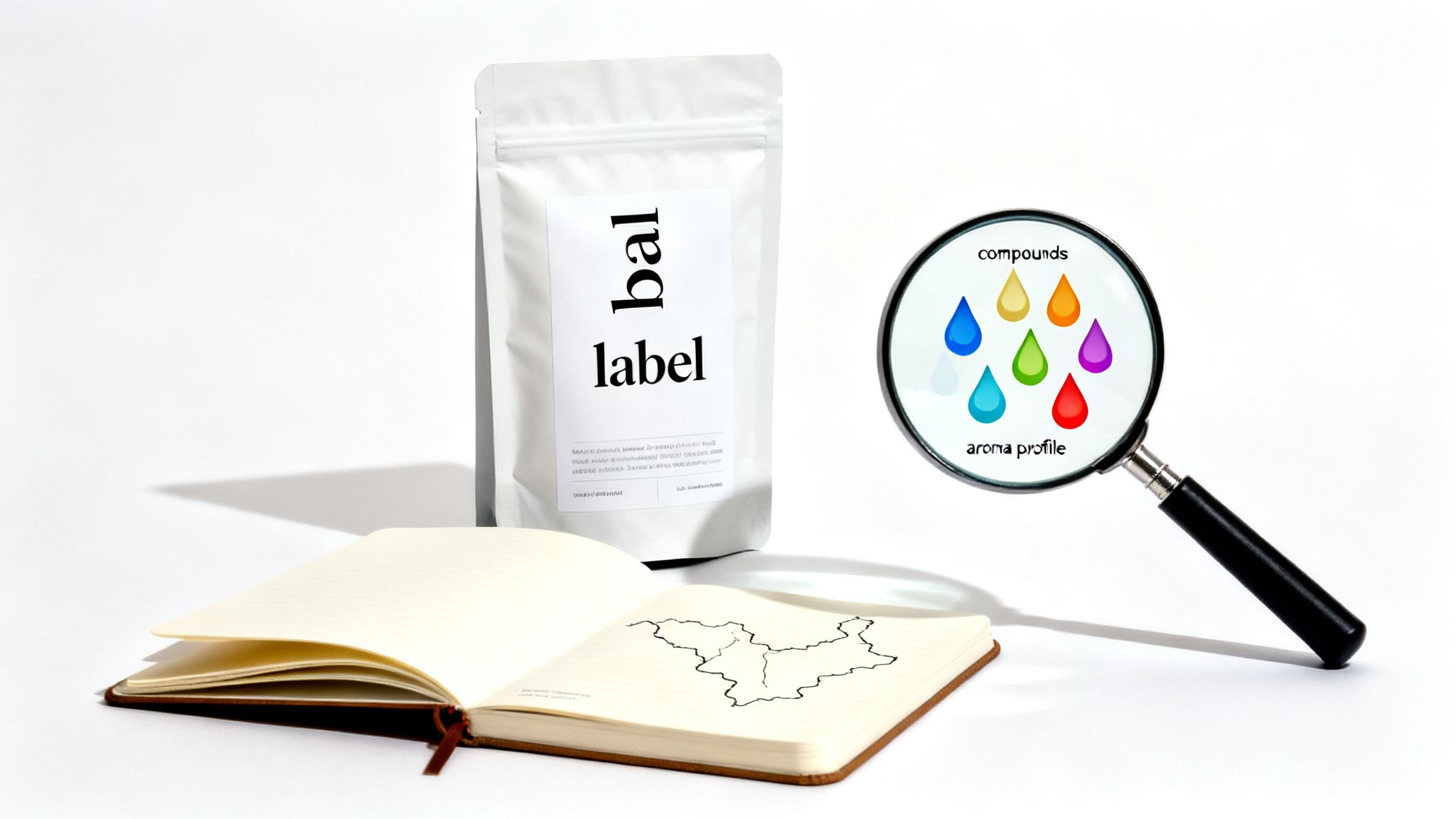
Relying solely on the “sativa” or “indica” label is a bit like judging a book by its cover. It gives you a hint of the genre, but it tells you nothing about the plot, the characters, or how the story will actually make you feel. You might expect a comedy and end up with a tear-jerker.
For a long time, the cannabis world operated on a simple shorthand: sativa for an energetic, cerebral high, and indica for a relaxing, body-focused stone. It was a decent starting point, but it's an oversimplification that often leads to confusing experiences—like feeling sleepy after consuming a product you thought would give you a boost. The question "does sativa make you sleepy?" pops up because of this exact mismatch between expectation and reality.
The truth is, these terms are really botanical classifications. They describe a plant's physical characteristics—like a sativa's tall stature and thin leaves versus an indica's short, bushy build—not its guaranteed chemical makeup.
Beyond the Botanical Label
Think about it this way: you could have two different products, both labelled "sativa." One might spark creativity and focus, perfect for a daytime project. The other could make you feel racy, anxious, or, yes, even surprisingly tired. This happens because their internal chemistry, the specific blend of cannabinoids and terpenes they contain, is completely different.
It’s the ingredients inside, not the category on the outside, that truly shape your experience.
The real secret to predicting effects isn't the sativa or indica name; it's the product's unique chemical fingerprint. Grasping this is the first step toward finding a consistent and enjoyable experience every time.
This is why it pays to look past the marketing hype and get to know the actual compounds at play. When you start looking for specific cannabinoids and terpenes, you're no longer guessing; you're making an informed choice. To go deeper, you can learn about the power of whole-plant cannabis and how all the components work in harmony.
The Problem with Oversimplification
Ultimately, the sativa-indica model just doesn't hold up because it ignores the beautiful complexity of the plant. Sticking to these labels as your only guide is like trying to navigate Vancouver with a map that only shows two main roads. You’re definitely going to miss your destination.
So, if a sativa makes you feel sleepy, it's not breaking some unwritten rule of cannabis. It's just showing you the limits of an outdated system. That sleepy feeling is a direct result of its unique chemical profile interacting with your unique body. By focusing on those details, you can finally start to understand and predict how any given product will actually make you feel.
The Real Players Shaping Your Cannabis Experience
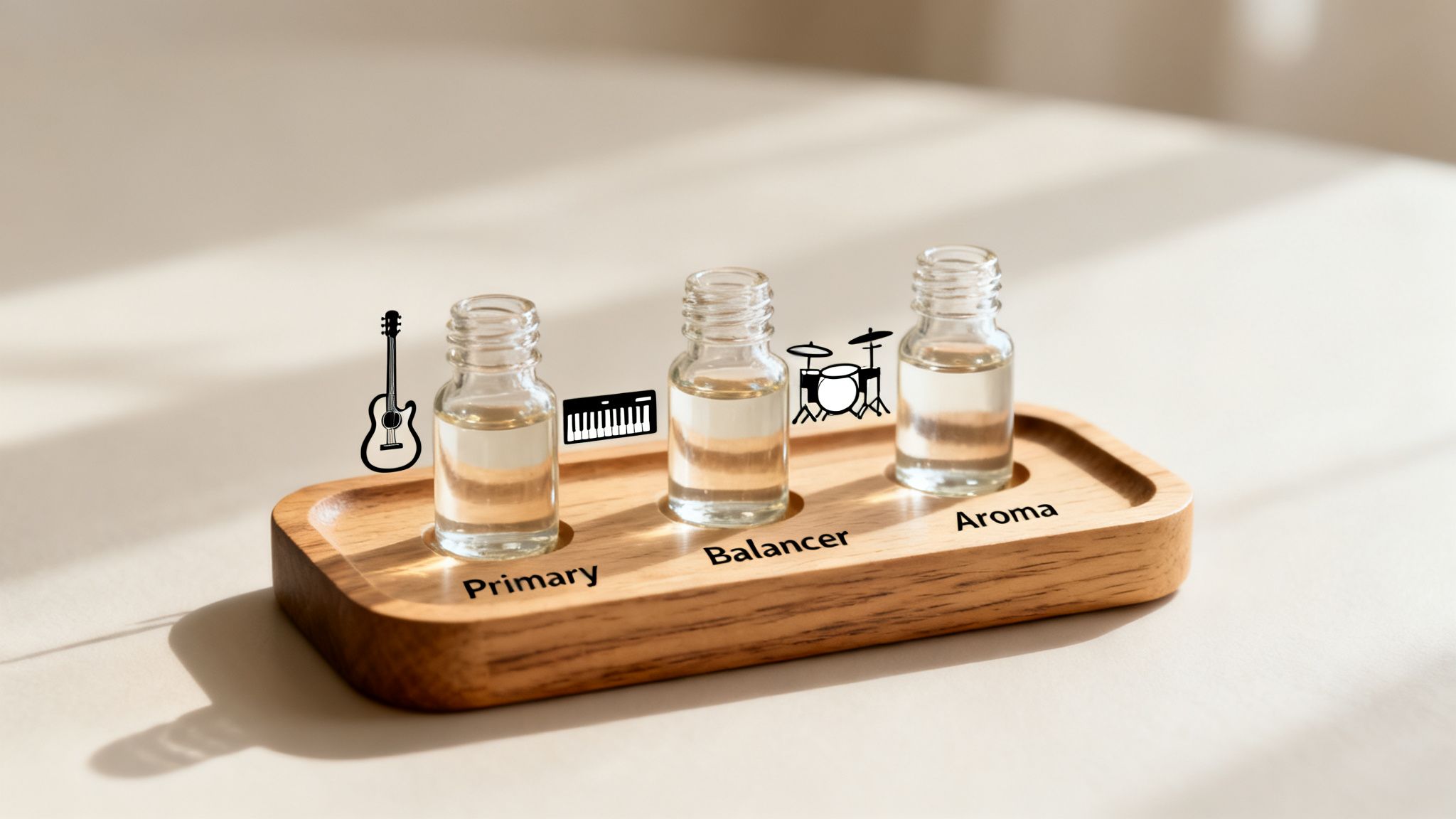
If the whole sativa vs. indica thing is an outdated model, then what actually determines how a specific product will make you feel? It all comes down to the unique mix of active compounds in the flower or extract. Think of it like a band—each member plays a crucial part in the final sound.
The two most famous members of this band are the cannabinoids. They're the ones laying down the core melody of the experience.
- Tetrahydrocannabinol (THC) is the rockstar, the lead singer known for delivering the primary psychoactive effects, or the "high." It’s the compound most people are familiar with.
- Cannabidiol (CBD) is more like the steady bassist. It’s non-intoxicating and works in the background, often balancing out and modulating the more intense effects of THC.
But the story doesn't end with these two. While cannabinoids lay the foundation, they don't perform solo. The real artistry comes from another group of compounds that, until recently, didn't get nearly enough credit.
The Unsung Heroes: Terpenes
Ever opened a jar of cannabis and been hit with a wave of citrus, pine, or earthy funk? That's the work of terpenes. These are the aromatic oils that give cannabis—and countless other plants, from lemons to lavender—its distinctive scent and flavour.
But here’s the key: terpenes do way more than just smell nice.
In our cannabis band, terpenes are the supporting musicians who define the entire genre of the song. They're the difference between an upbeat punk track and a mellow, soulful ballad. One terpene might steer the experience toward feeling energized and focused, while another can introduce a deeply relaxing quality.
This is where we start to find the real answer to our original question. A product labelled "sativa" could be packed with a calming terpene like myrcene, completely flipping the script and leading to a sleepy, couch-locked feeling instead of the energetic buzz you were expecting.
Getting to know just a handful of the most common terpenes can be a game-changer, allowing you to predict and fine-tune your experience with incredible accuracy.
It's All About the "Entourage Effect"
When cannabinoids and terpenes come together, they create something special called the entourage effect. The idea is simple: the combined effect of all these compounds working in harmony is far greater than the effect of any one of them in isolation.
Think of it like making a sauce. THC is your base ingredient, maybe the tomatoes. But the terpenes are the spices and herbs—the basil, oregano, and garlic. Each one adds its own distinct character, and the final blend creates a rich, complex flavour you couldn't get from just plain tomatoes.
This synergy is precisely why looking beyond the sativa/indica label is so crucial. By checking a product’s lab report or detailed description, you get the full recipe. You can see the cannabinoid percentages and the dominant terpene profile, giving you a much clearer picture of the effects you can expect. As you get more familiar with these compounds, you can learn more about the therapeutic potential of CBD and its vital role in this fascinating chemical dance.
How Your Body and Choices Shape the Experience
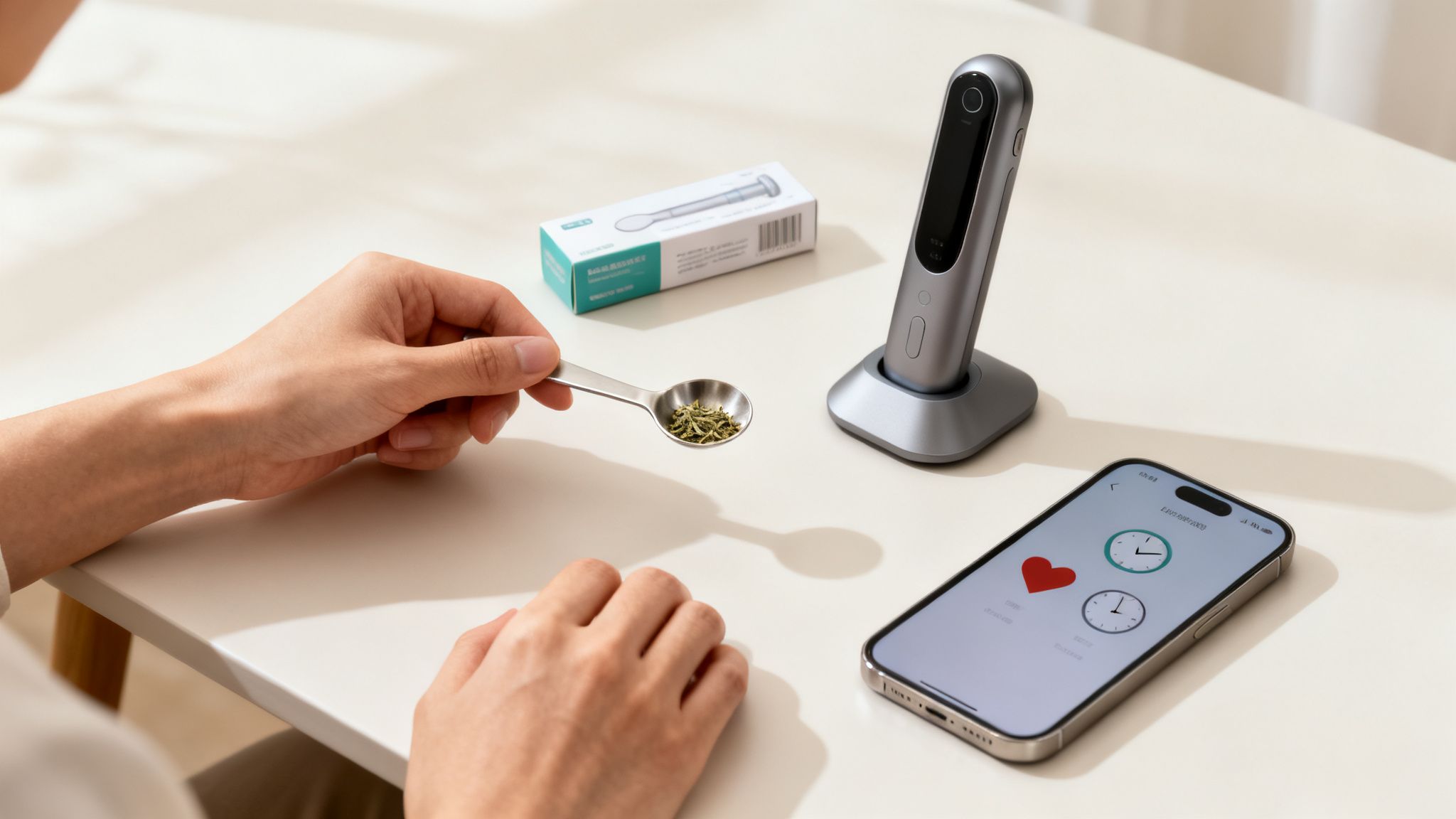
Ever shared a joint with a friend, only to have completely opposite reactions? You might be buzzing with creative energy while they're melting into the couch. This is where we move beyond the plant itself and look at the most important variable in the equation: you.
Just like some people can have a double espresso after dinner and sleep like a baby, everyone processes cannabis differently. Your personal biology—things like your metabolism, your natural endocannabinoid system, and even your mood when you partake—plays a massive role in the outcome.
This is precisely why there's no simple "yes" or "no" to the sativa question. Your body isn't just a passive receiver; it's actively interpreting the signals it gets from the cannabinoids and terpenes. What one person's system translates as "uplifting," another's might interpret as "overwhelming," leading to fatigue.
Your Choices Make a Difference
Beyond your built-in biology, the decisions you make have a huge impact. The two biggest levers you can pull are dosage and consumption method. Nailing these two is the key to getting the experience you’re actually looking for.
Even with a famously zippy sativa, a massive dose of THC can short-circuit the whole thing. Instead of that clean, cerebral high, your system gets overloaded and might just decide to shut down, leading to a crash. The golden rule is, and always will be, to start with a small amount and see how you feel.
This "start low and go slow" approach isn't just for beginners. It’s a smart strategy for everyone, every time you try a new product. It gives you the space to see how that specific strain works with your body before you dive into the deep end.
How You Consume Changes Everything
The way you get cannabis into your system fundamentally changes the experience. Think about it: chugging an energy drink feels a lot different than sipping it over an hour. The same principle applies here. The method you choose dictates how quickly the effects kick in, how long they stick around, and even what they feel like.
Take a look at how different methods can produce wildly different results from the very same sativa product.
How Consumption Method Shapes Your Sativa Experience
| Method | Onset Time | Duration | Typical Experience |
|---|---|---|---|
| Inhalation (Smoke/Vape) | 1-5 minutes | 1-3 hours | Fast-acting, heady effects. You get immediate feedback, making it easier to control your dose and find your sweet spot for energy. |
| Tinctures (Sublingual) | 15-45 minutes | 2-4 hours | A middle ground. Faster than edibles but longer-lasting than smoking. Offers a balanced experience that can be either uplifting or relaxing. |
| Edibles (Gummies, etc.) | 30 minutes – 2 hours | 4-8+ hours | Slower to start, but the effects are much more powerful and body-focused. The long duration can sometimes feel sedating, even with a sativa. |
| Beverages | 15-60 minutes | 2-4 hours | Often designed for a faster onset than traditional edibles. Can provide a more "social" and manageable buzz, but the intensity still builds over time. |
As you can see, the method is just as important as the strain.
An edible made from a so-called "energizing" sativa can feel completely different from smoking that same flower. The prolonged, full-body experience of an edible is often interpreted by the body as more sedating, regardless of the strain's reputation for alertness.
Understanding these nuances is your best tool. By matching your consumption method to the occasion, you can better align the product's potential with your personal goals and sidestep any sleepy surprises.
Navigating Your Cannabis Choices with Confidence
Alright, so now that you know terpenes, cannabinoids, and your own body are the real stars of the show, you can start making much smarter choices. It's time to look past the old-school "sativa" or "indica" labels and shop like someone who knows what they're doing, focusing on the details that actually create the experience you're after.
This all starts with reading product labels and lab results with a fresh set of eyes. Instead of just grabbing something because it says "sativa," take a second to dig into its chemical profile. Is it packed with THC? Can you spot any terpenes known for their uplifting vibes, like limonene or pinene? Answering these simple questions is what puts you in the driver's seat.
Speaking the Language of Effects
When you walk into Cannabission or browse our menu online, your best tool is knowing how to ask for what you really want. Instead of asking for a sativa, try describing the specific feeling you're aiming for. This gives our budtenders the clues they need to point you toward a product that will actually hit the mark.
Here’s how you can rephrase your requests to get better results:
Instead of: "I want a strong sativa."
Try: "I'm looking for something that sparks creativity for a daytime project."
Instead of: "Do you have any sativas that won't make me sleepy?"
Try: "I need something energizing for a social gathering that will help me feel upbeat and engaged."
This little change in how you ask makes a world of difference. It shifts the conversation from a botanical category (which can be misleading) to the desired effects. It lets our team match you with a product based on its proven chemistry, which massively boosts your chances of having a great, predictable experience. For more on this, check out our guide on how to elevate your cannabis experience.
The goal is to move from asking about a type of plant to describing an experience. This simple change transforms you from a passive buyer into an informed consumer who knows exactly what they want to achieve.
Why Sativa Is Rarely the Answer for Sleep
The data from real-world cannabis users backs all of this up. One major study on Canadian users found that sativa-dominant strains were the least popular pick for anyone trying to get some rest. In fact, compared to indica-dominant products, sativas were chosen for sleep-related sessions only about 10-15% of the time. That pretty much cements their reputation for energy, not drowsiness. Discover more insights about these cannabis user trends on pmc.ncbi.nlm.nih.gov.
This lines up perfectly with everything we've covered. So, does sativa make you sleepy? Almost never. By focusing on the full chemical profile and being clear about the experience you want, you can confidently pick products that deliver the energy, creativity, or social buzz you're looking for—and leave the sleepy surprises behind.
Got Questions About Sativa? We've Got Answers.
We've unpacked the science and debunked some old myths, but you might still have a few questions buzzing around. Let's tackle some of the most common ones people ask about sativas and whether they can actually make you sleepy.
So, Can a Sativa Strain Ever Make Me Feel Tired?
Yes, absolutely. It's not the most common outcome, but it can definitely happen. Think of it this way: even a shot of espresso can make you feel jittery and then crash, right? A very high dose of THC, regardless of the strain, can sometimes overwhelm your system and lead to fatigue, especially as the initial high fades.
You also have to remember that some plants labelled "sativa" might have a surprising terpene mix, with higher amounts of relaxing terpenes like myrcene. At the end of the day, your own body chemistry plays the lead role. It’s always smarter to look at the full chemical profile and your dosage rather than just the sativa/indica sticker.
The real question isn't "does sativa make you sleepy?" but rather "what in this specific product could make me sleepy?" Most of the time, the culprit is a high dose of THC, not the sativa label itself.
What Terpenes Give That Energizing Effect?
If you're chasing that classic uplifting, creative buzz, your best bet is to become a terpene detective. Checking out the lab results or detailed product descriptions is a far more reliable path to finding an energetic high than just grabbing anything with "sativa" on the package.
Keep an eye out for these terpenes, which are often linked to alertness:
- Limonene: Just like the name sounds, it has a zesty citrus aroma and is often associated with a mood boost.
- Pinene: This one has that fresh, sharp scent of a pine forest and is sometimes linked to feelings of focus.
- Terpinolene: A bit of a wildcard, this terpene has a complex fruity-floral scent and often shows up in strains known for their stimulating effects.
If Sativa Isn't the Answer, What Should I Look for to Relax?
The strategy is exactly the same, just flipped. To find a product that helps you unwind, you ignore the "indica" label and focus on the terpenes known for their calming properties.
Here are the key players for a more chill experience:
- Myrcene: The most widespread terpene in cannabis, it has an earthy, almost clove-like scent and is famous for its relaxing qualities.
- Linalool: If it smells like lavender, it’s probably linalool. This floral terpene is strongly associated with calming, soothing sensations.
- Caryophyllene: This is the spicy, peppery terpene also found in black pepper. It’s often linked to soothing effects.
Does When I Use a Sativa Actually Matter?
It sure does. Since strains with a "sativa-like" profile—think uplifting, cerebral, and energetic—are great for getting things done, most people prefer them during the day. They can be a great companion for creative work, hanging out with friends, or getting out into nature.
Using a really stimulating product when you're trying to wind down for the night might not be the best idea; it could leave your mind racing when you'd rather be drifting off. Your timing and setting are crucial parts of the experience, so always think about what you want to achieve before you choose your product.
Ready to find a product with the perfect profile for what you're looking for? The team here at Cannabission lives and breathes this stuff. We can walk you through our collection to find something just right. Whether you're after energy, creativity, or pure relaxation, we'll help you choose with confidence. Shop our menu online for pickup or delivery in Kelowna today!


